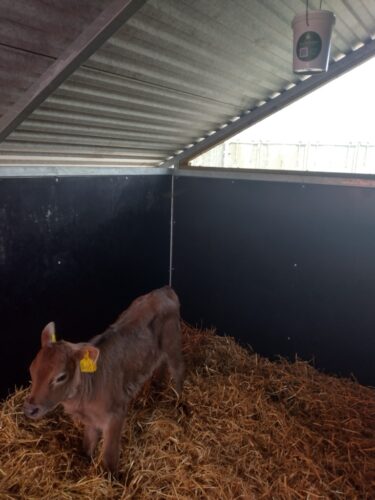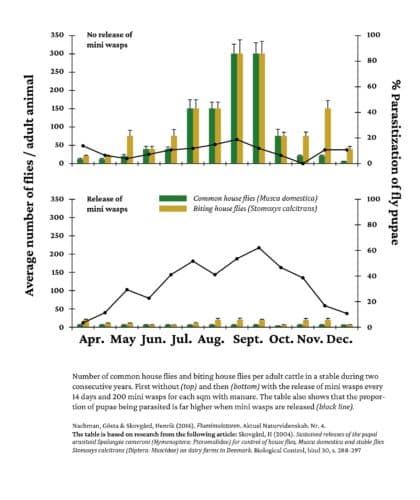
Predatory flies (Hydrotaea Aenescens) is a certain, small type of fly. They can be used to remove unwanted flies in pig stables and cattle stables. They are natural enemies of the common house fly (Musca domestica) and the stable fly (Stomoxys calcitrans), as their larvea prey on other flies’ larvea. If they are added to stables regularly, they can keep the population of unwanted flies to a minimum in the stable.
Avoid that the predatory flies dies or suffer nuisance – before they get to the stable environment to do their job
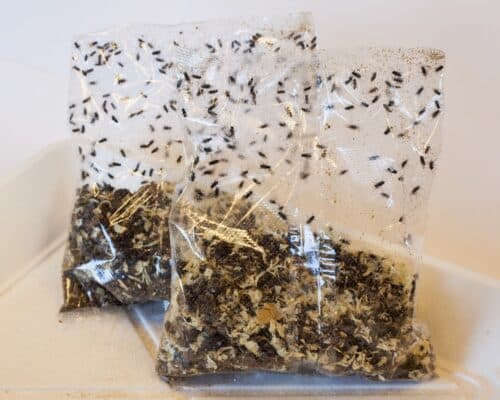
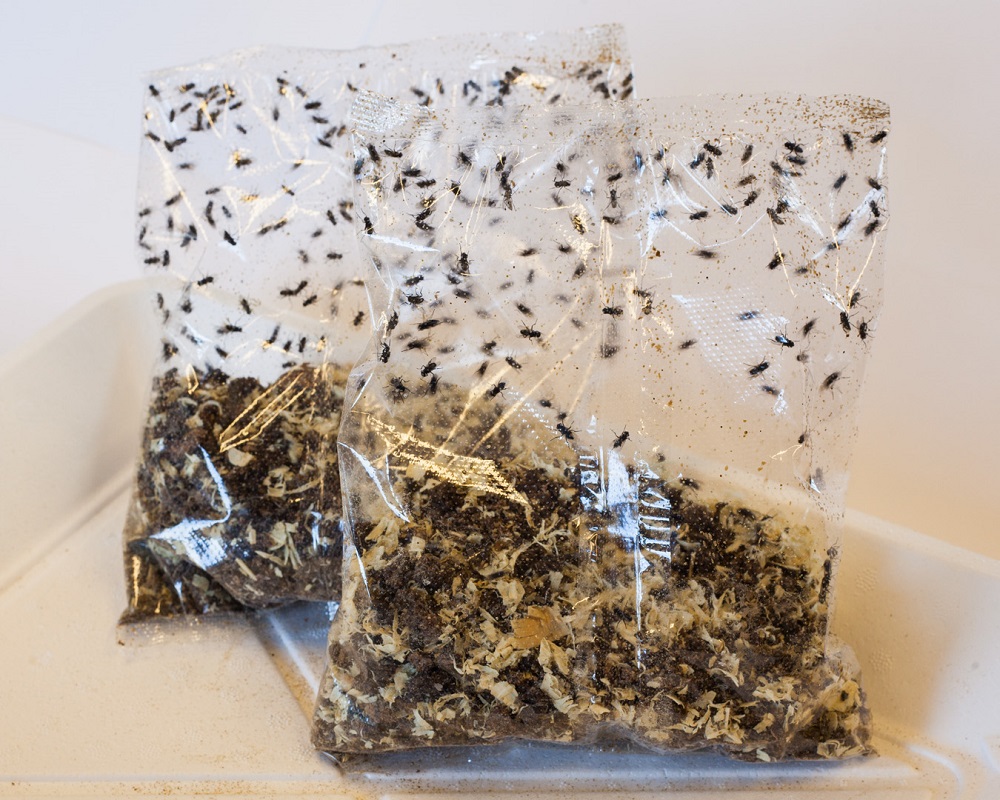
Predatory flies from Miljøfluen are packed in perforated bags and shipped to the stable, where the unwanted flies are to be removed. In the stable, you are to unpack the bags and place them in the plastic container that is included the first time you recieve predatory flies.
The flies are packed in bags with a small amount of protective material. This helps to isolate the flies from, the the cold and protects them during transport.
However, it is also important that you know how to take care of the bags with predatory flies when they arrive at the stable.
The flies are alive in the bags when they arrive. Even though they are quite robust, they are live animals and they cannot stand too much heat or too much cold.
This article gives you some guidance in how to handle the bags with predatory flies, when they arrive at the stable. If you follow these simple rules, you avoid damaging the flies and get the most out of the them.
Advice no. 1: Open the package and let the flies have some air
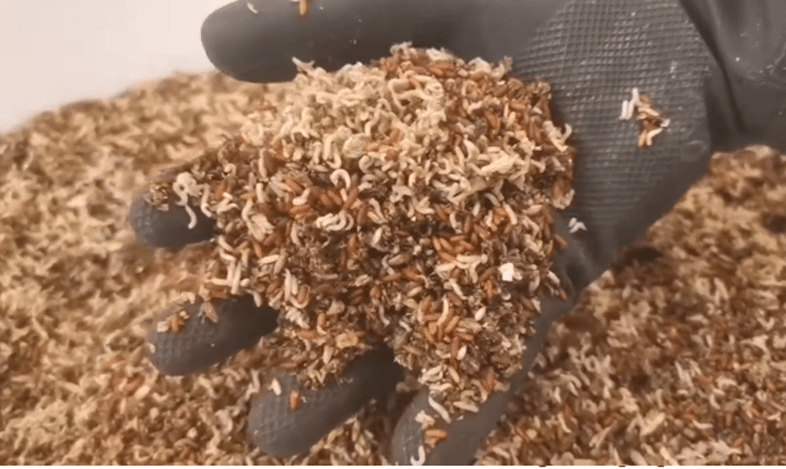
Inside the bags are live flies. However you will find more larvea, puppae and eggs than live flies when the bags arrive. At the larvae stage the flies wriggle around a lot, thereby generating a lot of friction heat. You may find that the bags feel warm to the hand, and that is caused alone by the friction heat provided by the larvea.
Naturally, flies become more active the warmer the environment. However, too high temperatures can kill them. Hence, it is a good idea to open the package on arrival and let the flies have some air.
If you don’t have time to open the bags and add them to the stable environment just as the package arrive, you can let them stay in the packaging for a day or two, before adding them to the containers in the stable. As long as you open the package upon arrival and let some air in – they will be fine.
Advice no. 2: Do not place the predatory flies too cold
Even though the predatory flies generate a lot of friction heat and sometimes need to be cooled down upon arrival (See advice no. 1), they cannot stand too much cold either.
The cold makes the flies slow down their activity and it can delay their life cycle. If you place the package with flies in a cold location, this can slow down their process of hatching. Thay can stand some cold – often it just slows down the process – however too much cold can kill them. Especially during times of frost.
From the time the flies arrive and until you unpack the bags, you need to avoid placing the flies in a cold environment. They should not be stored outside during wintertime for a long period of time.
Advice no. 3: If the flies do not move much at arrival it could be caused by a cold environment during transport
If you find that the flies are not moving around in the bags as much, it can be caused by a cold environment during transport.
As a rule of thumb, a normal cold affect to the bags, causes no problem. However, the flies can seem less active and their life cycle can be delayed a bit. You can help the flies resume their normal level of activity by placing them in a warm place (without opening them). It could be in a front room, where you can keep a bit of an eye with them.
After a short period of time in warmer conditions, you should be able to see more movement and hatched flies in the bags.
If the flies haven’t shown any sign of life after 8-10 days, the cold affect might have been too much for the flies to survive. Please contact Miljøfluen® by telephone +45 98259900 or via info@miljofluen.dk and have the bags replaced – free of charge.